
Fortress Americas

The Islamabad talks collapsed this morning after 21 hours. Vance boarded Air Force Two without a deal. Trump ordered a naval blockade of the Strait of Hormuz before the plane was airborne. Markets reopen Monday into a world where the highest-level U.S.-Iran negotiations since 1979 produced nothing — no nuclear commitment, no strait reopening, no framework for ending a six-week war that has already removed 20% of global seaborne oil from circulation.
While this was happening, $900 million in net capital flowed into Brazil. $44 billion fled Asia and Eastern Europe. Goldman Sachs named Brazil its top emerging-market pick. Morgan Stanley outlined a bull case for the entire region, noting Latin American equities are trading near their lowest valuations in over two decades. The real and the peso strengthened against the dollar while nearly every other emerging-market currency cratered.
The money is telling you something. Listen to it.
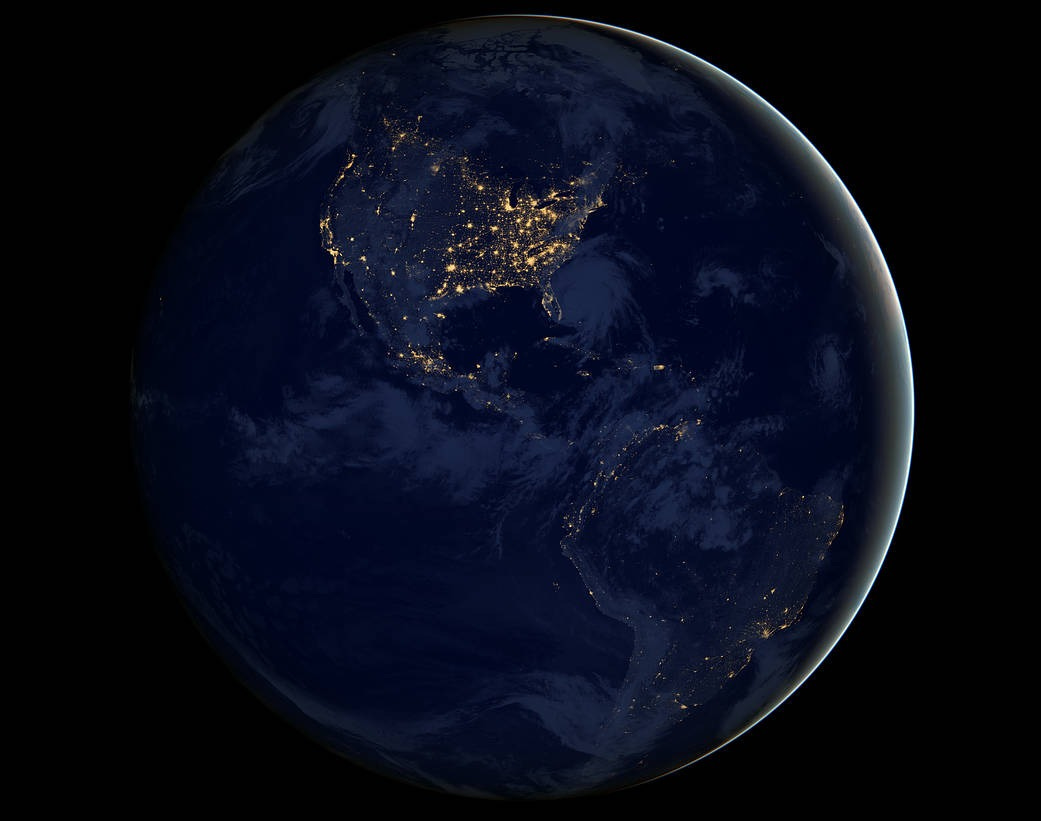
Geography is the argument. The Western Hemisphere sits an ocean away from every active chokepoint — Hormuz, Suez, the Taiwan Strait, the Black Sea — and contains within its borders the full stack of resources a modern industrial economy requires: oil, natural gas, lithium, copper, rare earths, agricultural capacity, fresh water, arable land. The United States produces more oil than any nation on earth. Brazil just hit 4.1 million barrels per day, a record, with exports of nearly 2 million bpd — and analysts project 5.3 million bpd by 2030. Guyana is the fastest-growing oil economy on the planet. Venezuela sits on the world’s largest proven oil reserves — 300 billion barrels — and produces 1.2 million bpd even with crumbling infrastructure and a post-Maduro political situation that Washington is still sorting out. Argentina’s Vaca Muerta holds the second-largest shale gas deposit outside the United States. Canada sits on the third-largest proven oil reserves globally.
None of these supply lines pass through the Strait of Hormuz.
That sentence is worth $44 billion, apparently. When Iran closed the strait on March 4th, ship transits dropped from 130 per day to 6 — a 95% collapse. The IEA called it “the largest supply disruption in the history of the global oil market.” Brent crude blew past $120. QatarEnergy declared force majeure on all LNG exports. Gulf oil production fell by 10 million barrels per day within two weeks. 230 loaded tankers are sitting inside the Gulf right now, waiting. The ceasefire was supposed to reopen the strait. It hasn’t. Iran is “restricting and conditioning traffic,” which is diplomatic language for still closed.
The structural repricing is already underway. Brazil’s fuel oil exports to Southeast Asia jumped in March as buyers scrambled for alternatives to Gulf supply. Over half of Brazil’s oil exports already go to China, with India taking an increasing share — a reorientation that predates the war but has accelerated violently since. Shell Brasil’s president called the conflict an “enormous opportunity” for Brazil to attract investment, citing geopolitical stability and production reliability. Upstream investment in Brazil is projected at a record $21.3 billion for 2026.
Disruption reprices permanently. The ceasefire could hold. Iran could reopen the strait tomorrow. Doesn’t matter — the repricing has already happened. Every corporate board in Asia that watched 20% of global oil supply vanish overnight is running scenarios on Western Hemisphere sourcing now, not when the war ends. The crisis doesn’t need to persist to change behavior. The demonstration that it can happen does that on its own. Capital prices the possibility and moves.
The 2025 National Security Strategy said the same thing in policy language four months before capital markets proved it. The NSS elevates the Western Hemisphere to America’s top priority region — above Europe, the Indo-Pacific, the Middle East — and declares a “Trump Corollary” to the Monroe Doctrine: the U.S. will “deny non-Hemispheric competitors the ability to position forces or other threatening capabilities, or to own or control strategically vital assets, in our Hemisphere.” Ports, energy facilities, telecommunications networks, mineral deposits. The strategy calls for readjusting global military posture toward the Americas and expanding naval presence. Hemispheric resource security is now a core national interest — stated, not implied. The Army activated Western Hemisphere Command in December to unify Northern and Southern Command under a single headquarters.
Critics called it neo-imperial nostalgia. Then the Strait of Hormuz closed, 20% of global oil supply vanished, and capital flooded into the hemisphere the NSS said to prioritize. The policy read as ideology in December. It reads as geographic determinism in April.
The details matter and some of them cut against the narrative. Brazil’s macroeconomic picture is messier than the oil export numbers suggest. The country is a net importer of natural gas — South America’s second-largest producer behind Argentina, still short of domestic demand. Soaring global gas prices feed directly into fertilizer costs, which feed into food prices, which feed into the political calculus of a president running for reelection in October against Flávio Bolsonaro. Lula imposed a 12% levy on oil exports to keep domestic supply stable and capture windfall revenue — a rational move that also signals the limits of Brazil-as-export-engine. Petrobras’s balance sheet fattens while grocery distributors choke on input costs. Hard to call that a clean win.
Ecuador and Colombia’s dollar-denominated bonds are outperforming, yes — but Ecuador just raised tariffs on Colombian imports to 100%. Chile saw gasoline prices jump 30% and diesel 60% in a single day in March. Kast’s approval has cratered. The region’s non-oil importers are getting hammered by the same price shock that enriches the exporters. Fitch has modeled the adverse scenario: oil averaging $100 through 2026, a 10% decline in global equities, wider credit spreads across the board.
Left to themselves, these countries will compete with each other, hoard windfalls, raise tariffs, and replicate every failure mode of commodity-rich regions that never cohere into anything larger than a collection of national balance sheets. Latin America has done this before. The 1970s oil shocks enriched Venezuela and Mexico while gutting Chile and Brazil’s import bills. No regional architecture emerged. No bloc formed. The money came, the money went, and the hemisphere remained a set of bilateral relationships with Washington — when Washington bothered to show up.
The variable this time is that Washington has bothered. The NSS declares hemispheric preeminence as a strategic objective. Western Hemisphere Command exists. The Trump Corollary explicitly targets non-hemispheric control of strategic assets — which means, in practice, rolling back Chinese ownership of ports, lithium concessions, 5G infrastructure, and agricultural supply chains across the region. China is now the leading trade partner of every South American country except Colombia. Reversing that requires the U.S. to offer something beyond military posture: capital markets access, dollar-system integration, infrastructure investment, energy offtake agreements. The kind of economic architecture that turns a collection of competing interests into a bloc.
The fortress doesn’t build itself. It requires a hegemon willing to subordinate short-term extraction to long-term alignment — to treat Brasília, Buenos Aires, Bogotá, and Ottawa as partners in a supply-chain civilization rather than sources of cheap commodities and cheaper labor. The NSS gestures at this. Every U.S. embassy is now directed to identify strategic acquisition and investment opportunities for American companies. The International Development Finance Corporation, the Export-Import Bank, the Millennium Challenge Corporation — the whole alphabet of American development finance is supposed to be pointed at the hemisphere.
Whether that amounts to a civilizational project or a resource grab depends on execution. But the structural incentive is clear: the hemisphere that holds the oil, the gas, the lithium, the copper, the rare earths, the arable land, and the fresh water also holds the world’s deepest capital markets, its reserve currency, and the only navy capable of keeping sea lanes open. Integrating those assets into a coherent economic bloc — one that can supply Asia, Europe, and itself without touching a single contested chokepoint — is the largest strategic opportunity since the Marshall Plan. And unlike the Marshall Plan, the geography already works. The infrastructure is the gap.
The fertilizer angle is the one most analysts are underweighting. The Arabian Gulf accounts for 20–30% of internationally traded fertilizers. 46% of global urea trade originates there. Brazil imports 10% of its fertilizer from the Gulf. India imports 18%. When the strait closed, the spring planting season across much of the developing world was immediately threatened. Iran eventually allowed humanitarian and fertilizer shipments through — but “eventually” and “allowed” are doing a lot of work in that sentence. Any country whose food security depends on a chokepoint controlled by a belligerent is reconsidering its supply architecture. That reconsidering benefits Western Hemisphere producers with fertilizer feedstock capacity — principally the U.S., Canada, and Trinidad and Tobago — and it doesn’t reverse when the strait reopens.
The Islamabad talks failed over nuclear commitments and Hormuz control — the two issues that cannot be split because they’re the same issue. Iran’s leverage is the strait. Surrendering it without nuclear guarantees means surrendering it for nothing. The U.S. demanding both denuclearization and strait reopening as preconditions is demanding total capitulation, which Iran’s domestic politics cannot deliver. Trump’s blockade announcement — intercepting every vessel that paid tolls to Iran — escalates the supply disruption further. Monday’s markets will reflect that.
For the Western Hemisphere, every failed negotiation, every extended closure, every week the strait stays shut is another week of structural capital migration toward the only major resource-producing region on earth that doesn’t depend on a contested waterway to get its product to market. The migration may pause if peace breaks out. It won’t reverse. The risk premium is now embedded in the system.
Six weeks ago, the Strait of Hormuz was a line on a map that energy analysts worried about and everyone else ignored. Today 230 loaded tankers are parked inside the Gulf, LNG is under force majeure, Europe’s gas storage is at 30%, Southeast Asia is rationing fuel, and the largest supply disruption in the history of the global oil market has no end date.
Fortress Americas is a price signal. The market is already there. The policy will follow, or it won’t matter.